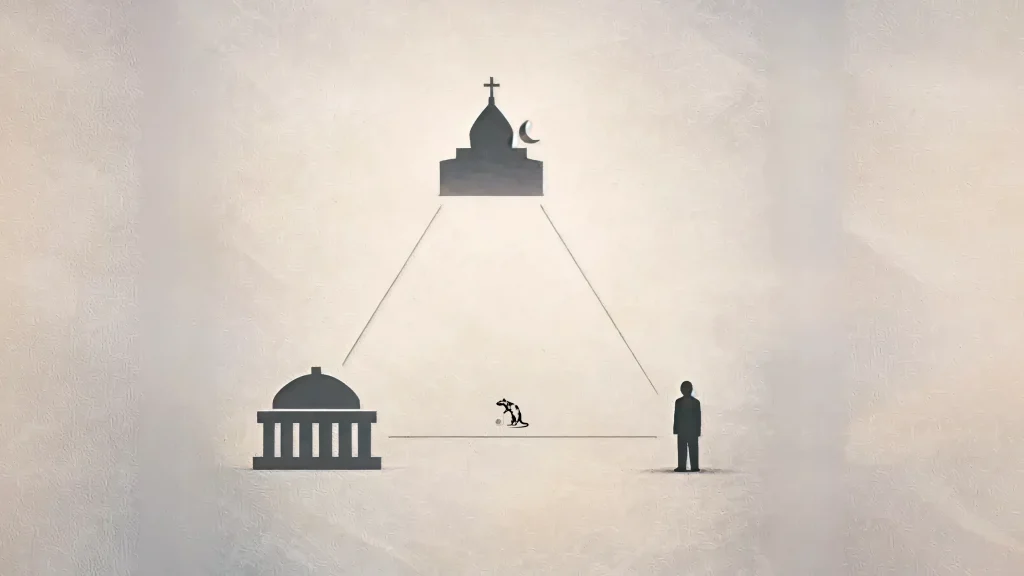


On paper, Pakistan is a pioneer. The Transgender Persons (Protection of Rights) Act 2018 was hailed as a milestone, allowing self-identification, prohibiting discrimination, and obligating the state to provide safe homes, schools, and healthcare. Liberals rushed to celebrate. South Asia had a “progressive” law.
But step outside the bubble of press conferences and op-eds, and you’ll find a different story. The intersex children abandoned in a hospital; the Khwaja Sira begging at a traffic light; the guru households that serve as both shelter and prison. The disconnect between law and lived reality is not an accident — it is the direct result of colonial hangovers and elite activism that talks over the very people it claims to represent.
South Asia was not always this hostile to gender-diverse communities. In Mughal and earlier courts, Khwaja Sira and intersex individuals were respected. They were advisors, performers, guardians of royal households. Lahore’s Heera Mandi was once a cultural hub, home to tawaifs who were custodians of poetry, music, and performance, not a red-light cliché.
Then came the British. With their Victorian morality and punitive mindset, they reclassified these communities as “criminal tribes.” The Criminal Tribes Act forced Khwaja Sira into prostitution, begging, and invisibility. Heera Mandi was stripped of its cultural dignity and recast as a brothel district.
This colonial shift from inclusion to stigma, from artistry to prostitution, still defines how Pakistani society views transgender and intersex communities today.
Fast-forward to today, and another distortion is taking place — this time not from colonizers, but from our own liberal elites.
Activists like Dr. Mehrub Moiz Awan and Shehzadi Rai have become prominent figures in Pakistan’s “trans rights” movement. Their visibility is significant — but their rhetoric often folds intersex struggles into the transgender transition discourse as if the two are the same.
They’re not.
Intersex people face trauma from birth: non-consensual surgeries, abandonment by families, systemic medical neglect. Their struggles are about survival, not transitioning or visibility politics. But in liberal advocacy, intersex is used as a Trojan horse — a sympathetic entry point to push broader, often Westernized debates around transition and sexuality.
Live and let live? Absolutely. But let’s not pretend that an intersex child in Pakistan benefits from this sleight of hand.
The hypocrisy does not end with Mehrub or Shehzadi’s Trojan horse politics. Enter the Maria Bs and the so-called Defence aunties. Yesterday, they flaunted liberal credentials, sipping lattes, preaching empowerment, and borrowing the language of choice and freedom. Almost overnight, they rebranded themselves as guardians of faith and morality, repeating populist religious rhetoric with confidence and applause.
This is where the confusion becomes dangerous. In reacting against what they now label a “liberal” or “trans agenda,” they fail to separate fiction from reality. Instead of asking how intersex people actually live, abandoned at birth, forced into begging, denied medical dignity, they collapse everything into one imagined threat. In opposing transgender politics, they end up attacking intersex existence itself.
So they bash Joyland. They rail against “Western influence” and “gender ideology.” But the truth is simpler and far more uncomfortable. What they call foreign already exists in our own soil. Go to villages, small towns, even urban mohallas. Boys are exploited by men. Khwaja Sira are desired in private and shamed in public. Entire underground economies function on silence and denial. These realities were not imported by liberals, they have existed long before hashtags or NGOs entered the conversation.
Yet Maria B and her Defence auntie brigade will not confront this. It is easier to wage a moral battle against films and slogans than to acknowledge what happens next door. By attacking what they see as a liberal agenda, they end up reinforcing stigma against the most vulnerable, people who were never part of that agenda to begin with.
That is the irony. In trying to look religious, respectable, and culturally authentic, they reproduce the same colonial morality that once criminalized and erased these communities. Shame replaces understanding. Silence replaces responsibility. And the mess that already exists in our streets is left untouched.
If the British criminalized and marginalized these communities, today’s elite activism risks erasing them again — this time not through law, but through discourse.
The colonial hangover left us with binary, heteronormative, patriarchal structures. Our liberals, instead of dismantling that, often repackage Western frameworks in English hashtags while ignoring indigenous histories where Khwaja Sira were dignified and powerful.
The result? A law that looks progressive on paper but fails in practice. Gurus, not the state, remain the only safety net. Healthcare is still humiliating. Education is still exclusionary. Violence is still rampant.
Here’s the truth:
Until we separate intersex struggles from the Trojan horse of elite activism, until we confront colonial hangovers still shaping our morality, and until we move advocacy out of privileged bubbles and into the streets, intersex and transgender people in Pakistan will remain trapped: symbols of progress for others, but strangers to dignity for themselves.
Real progress means reclaiming their pre-colonial dignity, confronting the colonial stigma, and refusing to let liberal elites use them as props in a narrative that does little for their actual lives.